Departments to investigate Ormonde warehouse collapse, the third in three months

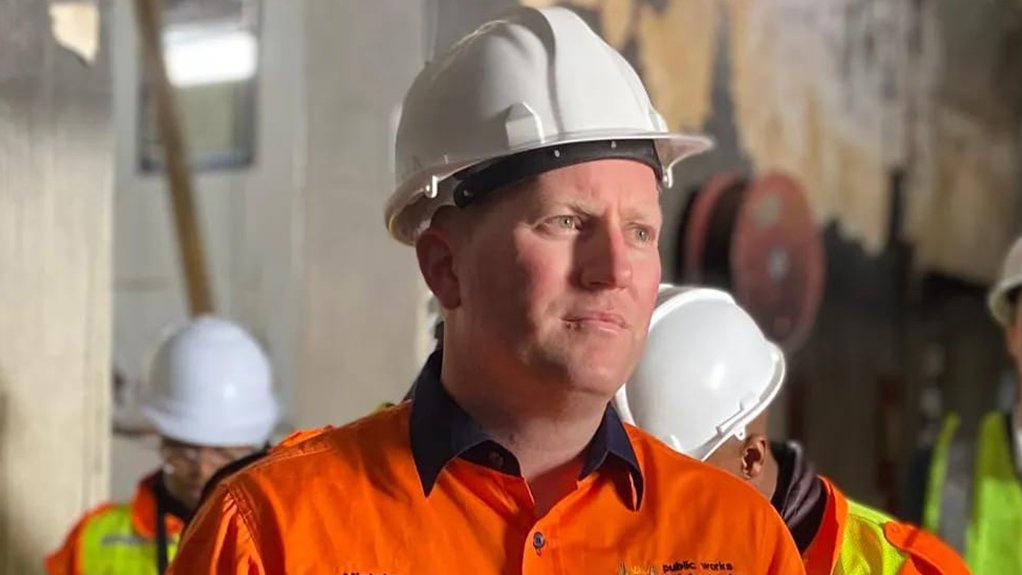


In the wake of the collapse of an under-construction warehouse in Ormonde, Johannesburg, in which nine workers died and three others were injured, the Department of Public Works and Infrastructure and the Department of Employment and Labour (DEL) have said investigations will be undertaken into the cause and whether there was negligence and/or misconduct.
The collapse on March 2, which is the third building collapse in the country in the past three months, raises serious concerns about potential systemic weaknesses in the regulation and enforcement of building standards in South Africa, said Public Works and Infrastructure Minister Dean Macpherson.
Parliamentary Portfolio Committee on Public Works and Infrastructure chairperson Carol Phiri similarly said the collapse pointed to a lack of oversight and a culture of cutting corners.
There are serious concerns about safety compliance and negligence in the sector, and the repeated construction-related deaths point to weak enforcement, poor oversight and a culture of cutting corners, she said.
Employment and Labour Deputy Minister Jomo Sibiya confirmed that the DEL would institute a formal investigation to determine the cause of the collapse and establish whether there were violations of occupational health and safety legislation.
Preliminary observations indicate serious compliance concerns, including the alleged failure to submit approved building plans, he added.
The DEL inspection and enforcement unit, supported by construction health and safety specialists, will lead the investigation in collaboration with the City of Johannesburg (CoJ) and the South African Police Service, once the site has been formally handed over, said Sibiya.
Macpherson similarly said construction professionals regulator the Council for the Built Environment would investigate the circumstances surrounding the collapse to determine whether professional negligence, contravention of mandatory standards or any misconduct took place.
“Buildings are not meant to collapse and, therefore, there must have been serious failures that led to this tragedy. We will get to the bottom of this and will release the findings publicly, once the investigation has concluded.
“We will also take action against any individual found to be complicit,” he said.
Further, Macpherson will aim to expedite a meeting with Human Settlements Minister Thembisile Simelane to review the regulation and enforcement of building standards in South Africa.
“Repeated building collapses point to deeper structural issues that must be urgently reviewed to improve building safety and construction oversight. As we work to turn South Africa into a construction site, it is critical that we strengthen the regulatory environment and create an environment where building construction can be trusted and the loss of life avoided,” Macpherson said.
Both Sibiya and Macpherson visited the site of the collapsed warehouse structure on March 3.
Meanwhile, CoJ Development Planning MMC Sibongile Mgcina said the collapse was the result of a failure of oversight, process and accountability. The city acknowledged that this tragedy could have been prevented.
The CoJ's preliminary investigations confirm that the building in Ormonde was illegally erected and had bypassed the required approvals and development procedures.
Additionally, the owners and developers failed to comply with the lawful requirements and development planning regulations, she said.
There is also strong evidence of systemic disregard for the rule of law in this development.
“This tragedy has exposed the fatal consequences of unregulated development and disregard for city by-laws,” she said.
The CoJ will take action against those responsible and emphasises that all construction activities, including residential extensions, must adhere to municipal by-laws and national regulations.
Mgcina will also undertake a compliance verification exercise in the surrounding area, where several industrial facilities are being developed.
South Africa must protect workers in an over-saturated labour market. There must be clear consequences and firm repercussions for those responsible for bypassing safety standards, said Phiri.
“Developers cannot continue to put profits before people. Municipal by-laws and safety regulations exist to protect lives. They must be enforced without fear or favour. Whether local or foreign, every worker has the right to return home safely,” she said.
Phiri also called on CoJ Executive Mayor Dada Morero to ensure strict compliance within the built environment sector.
INDUSTRY CALLS FOR ACCOUNTABILITY
Built environment industry organisations have called for accountability and better enforcement of regulations in the wake of the collapse.
Consulting Engineers South Africa (CESA) CEO Chris Campbell said no family should have to endure such a preventable loss. He stressed that South Africa must address the systemic failures that allow these tragedies to occur.
South Africa does not lack building regulations, and has established processes, professional standards and statutory requirements designed to protect lives. CESA called for accountability and enforcement reform.
Prior to construction, developers must submit building plans for approval, receive formal municipal approval before construction begins and ensure inspections take place during the building process.
“The challenge lies in consistent enforcement, public awareness and having the institutional capacity required to make the regulations effective. The safeguards are life-saving measures,” he said.
There are capacity constraints within local governments. Municipalities are responsible for reviewing building plans, conducting inspections and enforcing compliance, but they must be adequately resourced and staffed with the requisite skills to fulfil this mandate effectively.
“We have seen a gradual erosion of technical capacity within some, if not most, local authorities. If enforcement mechanisms are weakened, whether by understaffing, lack of expertise or ineffective monitoring, the entire system becomes vulnerable,” added Campbell.
This is important as there are some cases of deliberate non-compliance in which there may be conscious decisions to bypass established systems and regulations and thereby placing cost or convenience above safety, he said.
He stated that South Africa's regulatory framework was sound, but that, what was urgently needed is stronger enforcement of existing regulations Improved public awareness of mandatory building processes, and consequence management for deliberate non-compliance
There must also be adequate technical capacity in the municipal departments responsible for plan approvals and inspections.
Additionally, accountability must extend across the entire value chain, from property owners and developers to professionals and municipal authorities, Campbell said.
“CESA will support efforts that strengthen compliance, reinforce professional standards and restore public confidence in the integrity of our built environment.”
Further, the South African Council for the Project and Construction Management Professions (SACPCMP) said it is critical to use registered building inspectors on construction projects.
“Registered professionals provide the necessary experience and skills required to ensure that projects are executed to the standards that guarantee sustainability and the safety of structures.
“The only lawful way to assure that structures are erected in accordance with the correct and procedural building practices, is to appoint registered Building Inspectors on projects to monitor progress and highlight risk or misalignment in building standards,” said SACPCMP president Sharon Shunmugam.
The safety of the public is a priority. Where construction and related processes fail to adhere to the regulated standards of safety and construction management, the breakdown or collapse of structures is a possibility.
“The use of professionals within the construction environment is essential to ensuring that standards are adhered to, and that the built environment produces highest quality of outputs.
“Our sector is still facing incidents in which basic, lawful construction requirements are flouted, and lives are lost,” she said.
A professional, registered building inspector would bring irregularities to the fore and highlight risks. This would contribute to safeguarding the infrastructure and those working on site.
Further, statutory professionals body the Engineering Council of South Africa (ECSA) also participated in the March 3 inspection of the site of the collapse to assess the circumstances surrounding the collapse and the extent of the damage.
“ECSA has appointed a structural engineer and has initiated an investigation to probe the engineering aspects associated with this incident.”
As the statutory body responsible for regulating the engineering profession in South Africa and ensuring that registered professionals adhere to the required professional standards, ECSA will assess all relevant information relating to the engineering oversight associated with the project.
Should the investigation determine that any registered engineering professionals failed to comply with the standards of professional conduct prescribed under the Act, the council will take regulatory and disciplinary steps.
The primary responsibility of ECSA remains the protection of the public and the promotion of engineering excellence in South Africa, said ECSA acting CEO Tabisa Mtati.
Article Enquiry
Email Article
Save Article
Feedback
To advertise email advertising@creamermedia.co.za or click here
Research Reports

Projects
Latest Multimedia
Latest News

Showroom

Electrifying the world in a safe, smart, and sustainable way, ABB Electrification is a global technology leader in electrical distribution and...
VISIT SHOWROOM
As a reticulator, Egoli Gas provides natural gas to homes and businesses via underground pipes.
VISIT SHOWROOM

Press Office
Announcements
What's On
Subscribe to improve your user experience...
Option 1 (equivalent of R125 a month):
Receive a weekly copy of Creamer Media's Engineering News & Mining Weekly magazine
(print copy for those in South Africa and e-magazine for those outside of South Africa)
Receive daily email newsletters
Access to full search results
Access archive of magazine back copies
Access to Projects in Progress
Access to ONE Research Report of your choice in PDF format
Option 2 (equivalent of R375 a month):
All benefits from Option 1
PLUS
Access to Creamer Media's Research Channel Africa for ALL Research Reports, in PDF format, on various industrial and mining sectors
including Electricity; Water; Energy Transition; Hydrogen; Roads, Rail and Ports; Coal; Gold; Platinum; Battery Metals; etc.
Already a subscriber?
Forgotten your password?
Receive weekly copy of Creamer Media's Engineering News & Mining Weekly magazine (print copy for those in South Africa and e-magazine for those outside of South Africa)
➕
Recieve daily email newsletters
➕
Access to full search results
➕
Access archive of magazine back copies
➕
Access to Projects in Progress
➕
Access to ONE Research Report of your choice in PDF format
RESEARCH CHANNEL AFRICA
R4500 (equivalent of R375 a month)
SUBSCRIBEAll benefits from Option 1
➕
Access to Creamer Media's Research Channel Africa for ALL Research Reports on various industrial and mining sectors, in PDF format, including on:
Electricity
➕
Water
➕
Energy Transition
➕
Hydrogen
➕
Roads, Rail and Ports
➕
Coal
➕
Gold
➕
Platinum
➕
Battery Metals
➕
etc.
Receive all benefits from Option 1 or Option 2 delivered to numerous people at your company
➕
Multiple User names and Passwords for simultaneous log-ins
➕
Intranet integration access to all in your organisation